Investor Accountability Framework for Wealth Building
Investor Accountability Framework for Wealth Building
Accountability frameworks turn income into lasting wealth by pairing diversified investing with structured, expert-guided check-ins. VIP Coach builds this through evidence-based strategies covering passive income, retirement contributions, and debt management, giving mid-career professionals and executives a measurable path toward financial independence. Regular progress tracking replaces guesswork, converting ambition into disciplined habits that protect income earned through years of hard work.
Key Takeaways
- Strategic credit card debt management directly increases your wealth-building capacity and financial security.
- Emergency funds protect long-term investments and prevent derailing retirement goals during unexpected expenses.
- Allocating a portion of each paycheck to investments compounds wealth faster than savings alone.
- Lee Johnson's Master Certified coaching guides clients through mid-career wealth acceleration strategies effectively.
What Will This Accountability Framework Help You Achieve?
Clarity, structure, and consistent progress define what an investor accountability framework delivers for professionals ready to grow real wealth. Career success alone rarely builds lasting financial independence. Many high-earning professionals find that a demanding job and a long-term wealth strategy pull in opposite directions, leaving ambitious plans half-finished year after year.
The midpoint of a career changes the math. Financial decisions carry more weight, timelines shrink, and the cost of drifting without a plan grows steeper. That's precisely where structured accountability for investors earns its value: it turns vague financial intentions into a repeatable system with checkpoints, benchmarks, and honest course-correction.
How does VIP Coach keep clients on track?
Lee Johnson brings over two decades of coaching experience to every client relationship, guiding professionals through the real-world friction of balancing career demands with wealth goals. That depth of experience shapes a coaching style built on direct feedback rather than generic advice.
Why does VIP Coach limit how many clients it takes on?
VIP Coach accepts only three new clients each month, a deliberate choice to protect the high-touch attention that accountability requires. This kind of wealthworks accountability depends on close, consistent contact, something that's hard to deliver at scale.
What clients can expect from the framework:
- Regular check-ins that track progress against personal financial milestones.
- Direct, experience-based guidance from a coach who has spent 20-plus years in the field.
- A manageable client load that keeps coaching personal, not generic.
- A structured path for turning career income into long-term financial independence.
The goal stays consistent throughout: help each client unlock your potential and build wealth without sacrificing the career already in motion. For professionals ready to commit, this is the moment to Transform with VIP.

Why Do High Earners Stall Before Building Wealth?
Demanding careers create real roadblocks to wealth building, even for professionals earning strong salaries. Full-time jobs leave little bandwidth for the research, planning, and follow-through that smart investing requires. Many mid-career professionals hit a wall not because they lack resources, but because they lack a structured system for turning income into lasting assets.
What Makes Mid-Career Wealth Building Different From Earlier Career Stages?
Earlier in a career, chasing a hot stock tip or a trendy investment might feel harmless. At the mid-career stage, the game changes entirely. Wealth building now demands precision and discipline rather than speculation or lucky timing. The margin for error shrinks, and every financial decision carries more weight than it once did.
That shrinking margin is exactly why high earners stall. A single poor financial decision can stall momentum for years, turning a promising trajectory into a prolonged recovery. This is where a solid investor accountability framework becomes essential, giving professionals a repeatable process for evaluating decisions before money moves rather than after damage is done.
Why Does Accountability Matter More Than Motivation?
Motivation fades; structure doesn't. Accountability for investors means having checkpoints, metrics, and expert input built into the process, not just good intentions. Professionals who pair evidence-based strategies with expert guidance can grow sustainable wealth without putting their job security at risk.
This is the core idea behind wealthworks accountability: pairing rigorous, research-backed methods with real oversight. Instead of guessing, high earners get a framework that catches mistakes early and keeps long-term goals on track, even while a full-time career demands most of the day.
What Prerequisites Do You Need Before You Start?

Two things come before any investment plan: clean numbers and clean debt. Professionals who skip this groundwork often build strategies on shaky foundations, then wonder why momentum stalls months later.
VIP Coach, founded by Lee Johnson, built its approach around this exact starting point. Johnson, a Master Certified Life & Career Coach, structures the practice's investor accountability framework to match the real financial picture of ambitious professionals, not a theoretical one. That credential shapes how the framework sequences each step, starting with clarity before committing to tactics.
What Should Come First: Budgeting or Investing?
Budgeting comes first, every time. Professionals need a firm grasp of monthly expenses before directing dollars toward long-term goals, because understanding income against bills reveals how much room actually exists for saving and investing. Skip this step, and even a well-designed plan runs on guesswork.
Does Credit Card Debt Block Wealth Building?
Yes, unresolved high-interest credit card debt undermines wealth building before it starts. Credit cards charge steep interest when balances carry month to month. That cost quietly erodes returns no investment can outpace. Clearing or controlling that debt protects the integrity of any accountability for investors structure built afterward.
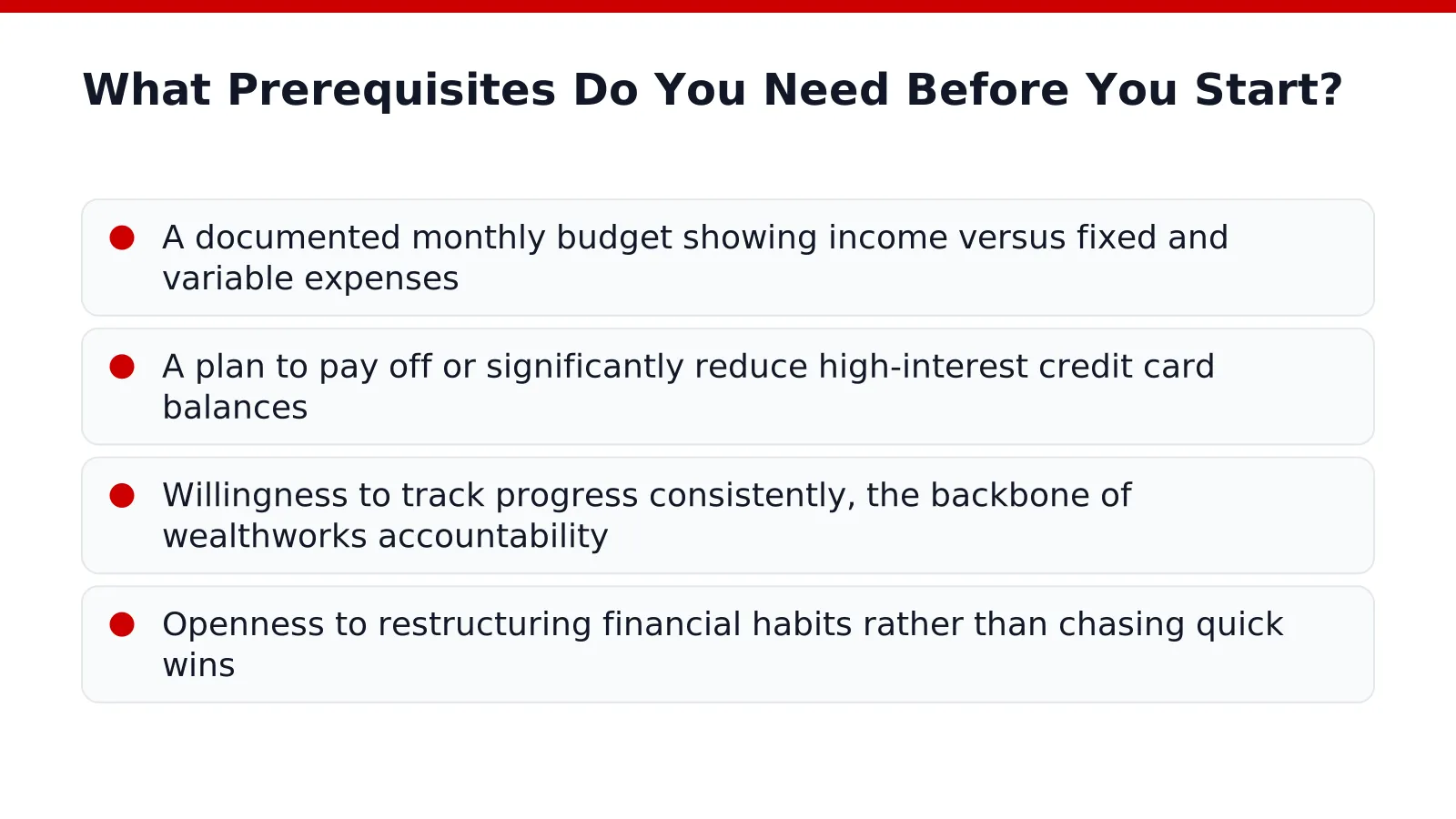
Before engaging a coaching partnership, professionals should confirm they have:
- A documented monthly budget showing income versus fixed and variable expenses
- A plan to pay off or significantly reduce high-interest credit card balances
- Willingness to track progress consistently, the backbone of wealthworks accountability
- Openness to restructuring financial habits rather than chasing quick wins
These prerequisites aren't red tape. They're the difference between a plan that holds up under pressure and one that collapses at the first unexpected expense. Professionals ready to unlock your potential financially start here, not with the next hot stock tip.
How Do You Build Your Accountability Structure First?

Building an accountability structure starts with choosing a system that tracks progress on a fixed schedule, not a vague promise to "check in sometime." Ambitious professionals converting career income into passive wealth need more than good intentions. They need a repeatable framework. Without one, high earners often watch strong income evaporate into unexamined spending or stalled investment plans, with no record showing where the money actually went.
A proven investor accountability framework starts with three building blocks:
- Define the target outcome. Pin down a specific wealth goal, whether that's a passive income threshold or a retirement timeline, before scheduling any sessions.
- Lock in a recurring check-in. Booking a session means committing to arrive prepared and on time, since half-shown-up accountability produces half-finished results.
- Pair structure with mindset work. A coaching framework built to break limiting beliefs sharpens decision-making and builds habits that make follow-through automatic rather than forced.
What Makes Accountability for Investors Actually Work?
Effective accountability for investors depends on consistency between sessions, not just the sessions themselves. Clients describe coaching relationships that feel easy to engage with and rich in practical knowledge, the kind of dynamic that keeps professionals returning instead of drifting back to old financial habits. That client feedback, reflected in a 5.00-star rating across 14 Google Reviews, points to a coaching environment where hands-on accountability actually sticks.
Does Wealthworks Accountability Require a Formal Coach?
Formal guidance speeds the process considerably. Wealthworks accountability works best when paired with structured coaching that targets mindset barriers alongside financial strategy. Professionals ready to stop guessing and start building wealth deliberately can Transform with VIP and unlock your potential through a framework designed for sustained, long-term results.
How Do You Run Quarterly Portfolio Reviews?

A quarterly portfolio review checks two things at once: tax efficiency today and flexibility for whatever comes next. Skipping this discipline leaves holdings exposed to rules, rates, and risks that shift faster than most career professionals have time to track. A structured review process gives executives and business owners a repeatable way to catch problems before they become expensive.
Running the review well means following a sequence, not just glancing at account balances once a season.
- Audit tax positioning. Review each asset to confirm it's still structured efficiently for the current year while leaving room to adapt as tax law or income changes.
- Stress-test against volatility. Model how the portfolio holds up under market swings and unexpected life events, from job transitions to medical expenses.
- Apply an investor accountability framework. Use a consistent checklist or scorecard so decisions get reviewed on schedule rather than on impulse.
- Reassess capital access strategies. Confirm that credit lines and funding tools still protect personal assets while supporting business growth.
- Document and commit. Record what changed and what stays the same, creating a paper trail for the next review.
What Does Accountability for Investors Actually Look Like?
Accountability for investors means tracking decisions against a plan, not against market noise. It turns vague intentions like "I should check my investments sometime" into scheduled, measurable checkpoints with clear ownership.
Why Does Wealthworks Accountability Matter for Busy Professionals?
Wealthworks accountability keeps mid-career professionals from drifting into reactive money management. A disciplined review process centers on mastering money strategies, from budgeting to passive income streams, that compound only when checked consistently. Without that rhythm, even solid strategies lose momentum.
How Do You Conduct Ongoing Alignment Checks?

Ongoing alignment checks happen through a structured, repeatable review process, not a one-time conversation. Each session measures current financial decisions against long-term goals, with the stakes rising the closer retirement moves into view. As the margin for error narrows year by year, every decision made in these checks carries more weight than it did a decade earlier.
VIP Coach built its process around a clear investor accountability framework, designed to keep clients on track between sessions rather than relying on memory or motivation alone. Clients consistently report that breaking down complicated financial processes into clear, sequential steps builds real confidence during these reviews. That clarity matters most when reviewing new opportunities. Lee Johnson's background as a real estate investing advocate based in Sterling, Virginia, shapes how each opportunity gets weighed against existing commitments.
What Does an Alignment Check Actually Involve?
An alignment check walks through a defined sequence rather than a vague check-in. The process typically follows these steps:
- Review current income streams and outstanding obligations.
- Compare recent decisions against stated long-term financial goals.
- Flag any opportunity that risks personal credit unnecessarily.
- Adjust next steps using a practical, step-by-step approach.
This structure gives professionals accountability for investors who juggle full-time careers alongside wealth-building goals. It keeps funding decisions practical rather than reactive.
Why Does Accountability Matter More at Mid-Career?
Accountability matters more at mid-career because decisions compound faster with less time to correct course. A missed signal early in a career costs little; the same misstep later costs years of recovery time. That's the thinking behind wealthworks accountability: pairing structured review with Lee Johnson's practical, step-by-step guidance so professionals unlock funding opportunities without putting personal credit at risk. The goal stays consistent: help clients unlock your potential through Transform with VIP, one disciplined review at a time.
How Do You Execute With Discipline Without Burnout?

Execution without burnout starts with removing financial drag before adding financial strategy. Clients build a sustainable wealth-building routine by pairing evidence-based strategies with expert guidance, strengthening financial stability without sacrificing job security or peace of mind.
Discipline collapses fast when high-interest debt sits untouched. No investment return reliably outbeats the interest rate charged on a credit card balance, which means disciplined execution has to begin with eliminating that debt, not working around it. Clients who try to invest aggressively while carrying revolving balances end up funding two opposing goals at once: growth and interest payments. That tension drains both money and motivation.
What should come first: paying off debt or investing?
Debt elimination comes first, every time. Living within one's means and paying down credit card balances protects the very discipline an execution plan depends on. Every dollar diverted to interest is a dollar that can't compound.
A workable sequence looks like this:
- Audit monthly spending and identify any revolving high-interest debt.
- Redirect discretionary spending toward paying that debt down aggressively.
- Set a fixed, automatic contribution toward long-term investments once debt is cleared.
- Schedule a recurring check-in to review progress against the plan.
Where does accountability fit into the process?
An investor accountability framework keeps execution steady when motivation dips, replacing willpower with structure. Building accountability for investors into the plan, through scheduled reviews and clear benchmarks, turns good intentions into consistent action.
Clients working with VIP Coach can bring this structure into focus during in-person sessions at the Sterling, Virginia office. WealthWorks accountability sessions translate strategy into a weekly rhythm that fits around a full-time career, not against it.
What Mistakes Derail Investor Accountability Fastest?

Skipping structured planning tops the list of costly mistakes. Professionals who treat wealth building as an afterthought ignore a basic truth: retirement, homeownership, and every major life goal all require accumulated wealth to become reality. Without a clear investor accountability framework, those goals stay abstract wishes instead of funded outcomes.
A second mistake shows up just as often. Many high earners assume a strong paycheck is the finish line. It isn't. Real freedom, the kind that lets someone change careers, relocate for family, or cover a medical emergency, depends on a financial cushion that income alone can't provide. That gap is exactly where accountability for investors matters most: it turns income into protected, usable wealth rather than money that disappears month to month.
Why Do So Many Professionals Lose Accountability Over Time?
Momentum fades when check-ins stop happening on schedule. Busy executives let weeks slide, then months, and suddenly the plan nobody's tracking isn't a plan at all. Fortunately, this slip is fixable fast: VIP Coach's team stays reachable Monday through Friday from 10:00 am to 5:00 pm, and Saturday from 10:00 am to 1:00 pm, so re-engaging doesn't require waiting for a quarterly review.
What's the Fastest Way to Get Back on Track?
Pick up the phone. Professionals who've gone quiet on their goals can call (571) 605-1484 and reconnect immediately.
Avoiding these pitfalls comes down to consistency, not complexity:
- Treat wealth goals as requirements, not someday-wishes
- Build a cushion beyond salary, not reliant on it
- Keep scheduled check-ins instead of skipping them
- Reach out the moment momentum slips
That's the heart of wealthworks accountability: steady contact, clear structure, and no room for drift.
About The Author

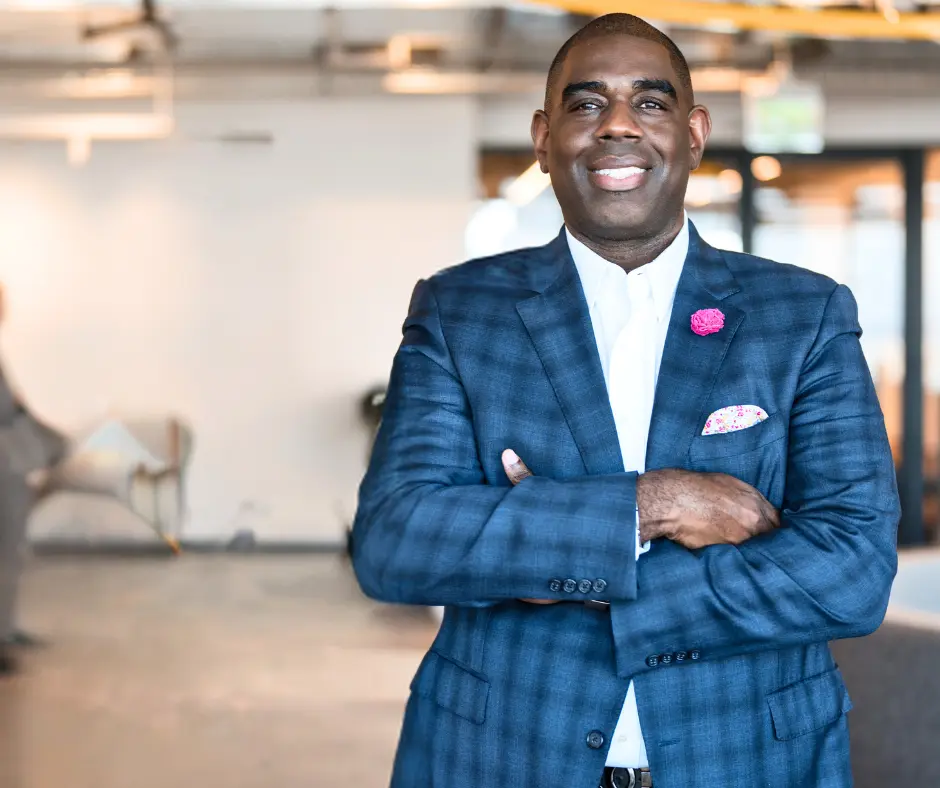
Lee Johnson founded VIP Coach and holds a Master Certified Life & Career Coach designation, backed by more than 20 years of experience guiding professionals through high-stakes career and business transitions. That depth of experience shapes the direct, experience-based coaching style behind every investor accountability framework VIP Coach builds.
Beyond the credential, Johnson's approach is grounded in real-world practice: hands-on entrepreneurial and real estate investment experience based in Sterling, Virginia. That combination gives clients practical, lived-experience guidance rather than theory alone, informing the structured check-ins, mindset work, and wealth-building strategy at the center of VIP Coach's coaching practice.
FAQ
What does VIP Coach's accountability framework involve?
The framework pairs diversified investing with structured, expert-guided check-ins, covering passive income, retirement contributions, and debt management for mid-career professionals seeking financial independence.
Why does VIP Coach limit new clients to three per month?
This deliberate cap protects the high-touch attention accountability requires, since close, consistent contact is difficult to deliver at scale.
What experience does Lee Johnson bring to coaching?
Lee Johnson brings over two decades of coaching experience, guiding professionals through real-world friction with direct, experience-based feedback rather than generic advice.
Conclusion
In closing, an investor accountability framework transforms wealth building from a solo struggle into a structured partnership where discipline replaces willpower and progress replaces drift. You've seen how alignment checks, debt elimination sequencing, and consistent check-ins work together to convert income into protected wealth. The professionals who break through to financial freedom aren't the ones with the biggest paychecks, they're the ones who show up consistently, stay accountable to their plan, and adjust course when life shifts. That's the difference between wishing for freedom and actually building it.
Contact VIP Coach
- 📞 Phone: (571) 605-1484
- ✉️ Email: [email protected]
- 📅 Clarity Call: Book a Free Clarity Call with Coach Lee
- 🌐 Website: transformwithvip.com
- 📍 Service Area: Sterling, VA and surrounding areas