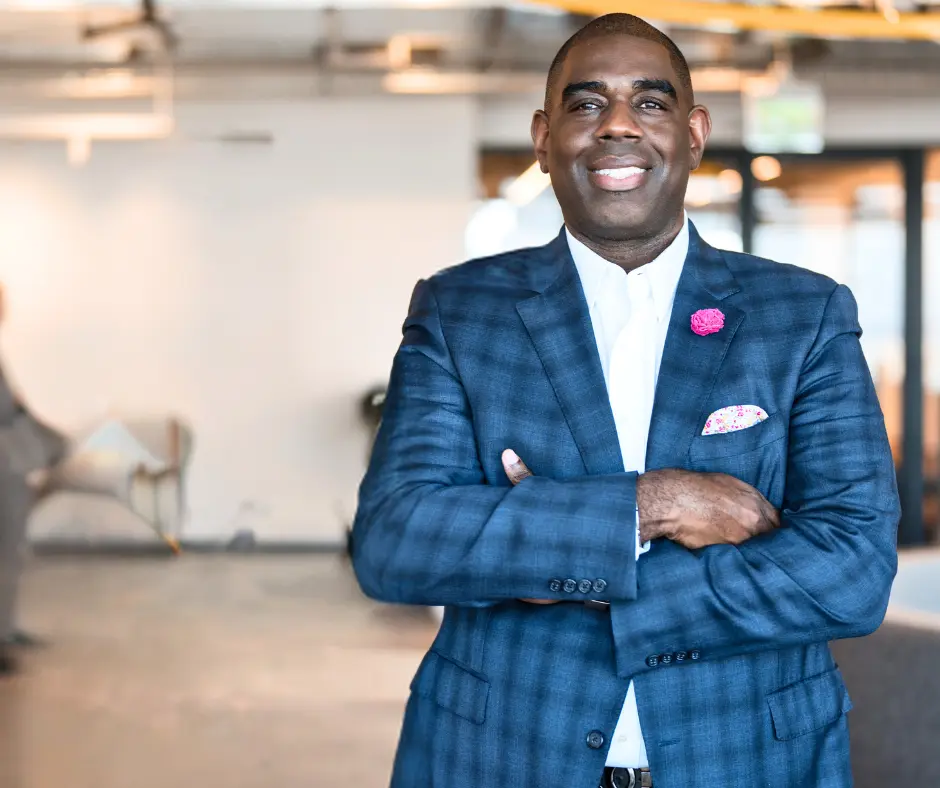
Coaching FAQ: Your Top Questions Answered
Coaching FAQ: Your Top Questions Answered
Working with VIP Coach starts with a required meeting with Coach Lee, who expects punctuality and preparation since time is the one resource that never renews. One-on-one sessions focus on career clarity, financial strategy, and personal alignment, tailored to each professional's specific goals rather than a generic framework.
Key Takeaways
- Lee Johnson, Master Certified Life & Career Coach, leads VIP Coach with a perfect 5.00 star rating.
- VIP Coach accepts only 3 new clients per month to ensure personalized, high-quality coaching relationships.
- VIP Coach operates with a dedicated 3-person team.
- Lee Johnson combines coaching expertise with entrepreneurship and real estate investing knowledge for comprehensive client guidance.

What Does Working With A Coach Actually Mean?
Working with a life coach means entering a tailored partnership built around one person's goals, not a generic playbook. Unlike group seminars or one-size-fits-all programs, this process centers on individual needs, both personal and professional. The relationship exists to produce measurable change, not just motivational talk.
For executives and business leaders, that change usually plays out on two fronts at once. Coaching aims to create meaningful transformation across both career trajectory and financial standing, since the two rarely move independently. A leader stuck in a plateau at work often feels that same stagnation in their bank account and daily sense of purpose.
Why Do So Many Professionals Feel Stuck Despite Their Success?
Success on paper doesn't guarantee clarity underneath it. Many high-performing professionals struggle to reach their full potential because they lack clarity, confidence, or a strategic plan for what comes next. Titles and salaries climb, but the internal compass doesn't always keep pace.
What Does A Coach Actually Do In That Relationship?
A coach's role isn't to hand over answers but to surface the capabilities already present. Expert guidance helps clients unlock their true potential, often by identifying blind spots, strategic decisions, and mindset shifts, that someone in the middle of their own career can't always see alone.
Working with a coach typically involves:
- Clarifying specific goals across career and financial dimensions
- Identifying the mindset or strategic gaps blocking progress
- Building accountability structures for consistent action
- Translating ambition into a concrete, personalized plan
These executive coaching questions usually surface early: What does growth actually look like? Where is confidence missing? What strategy has been avoided out of fear or habit? Answering them honestly is where the real work, and the real transformation, begins.
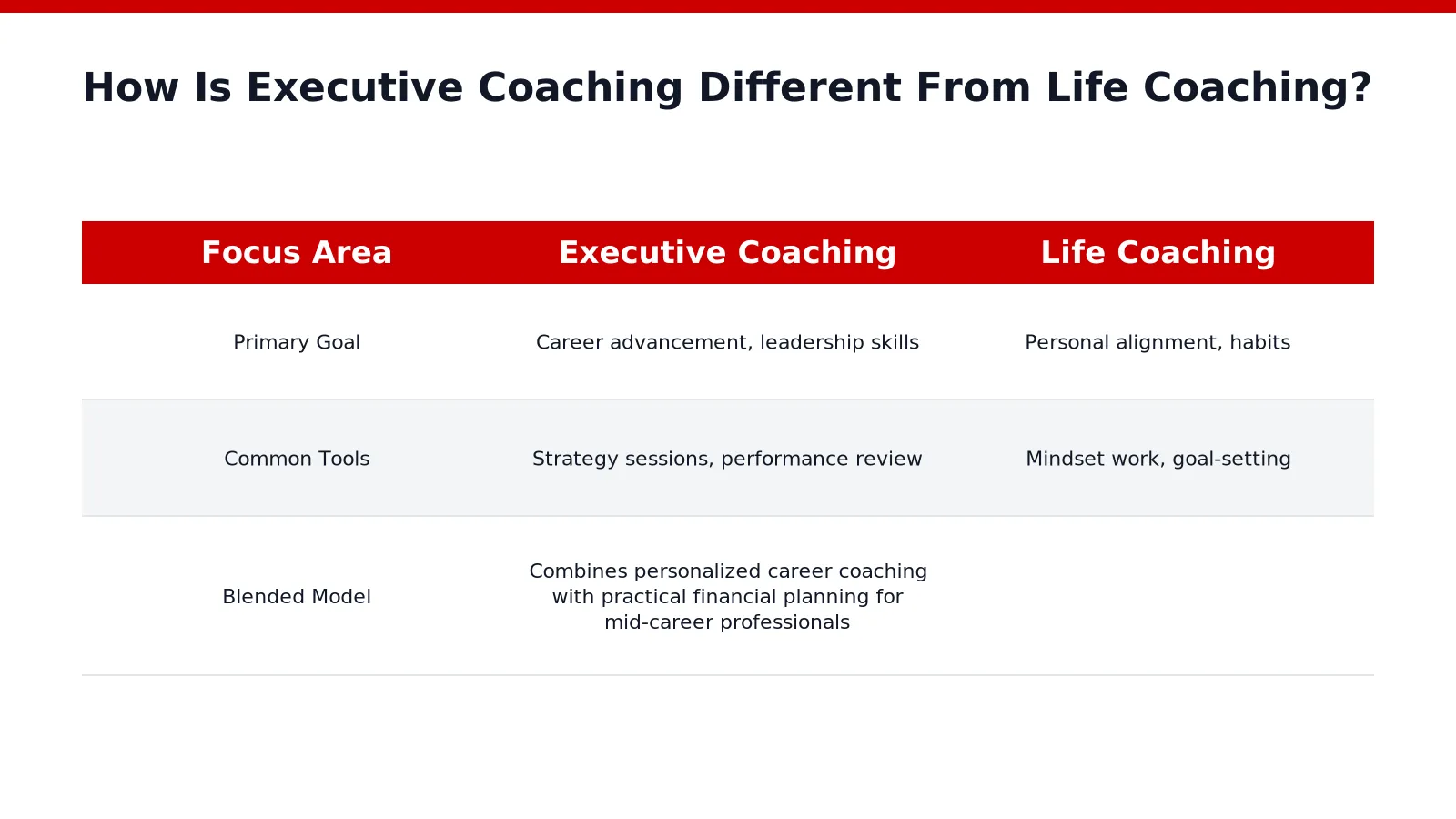
How Is Executive Coaching Different From Life Coaching?

Executive coaching zeroes in on leadership performance, career strategy, and business growth. Life coaching addresses personal alignment, habits, and overall well-being. The two disciplines overlap more than most professionals realize, especially for mid-career leaders juggling business decisions and personal fulfillment at the same time. A coaching method built for mid-career professionals, entrepreneurs, and small business owners blends personal growth with money strategies, giving clients a sense of control over both halves of their lives.
Lee Johnson, a coach, entrepreneur, and real estate investing advocate based in Sterling, Virginia, brings decades of experience to this blended approach. His credentials as a Master Certified Life & Career Coach span both personal and professional guidance, meaning sessions don't force clients to pick a lane. That distinction matters for executives who've outgrown narrow, one-dimensional coaching models.
What questions should professionals ask before choosing a coach?
Smart executive coaching questions probe both skill-building and personal values. Candidates for coaching should ask how a program handles career strategy alongside financial planning, since separating the two creates blind spots.
Is working with a life coach useful for career-focused leaders?
Yes. Working with a life coach benefits leaders because career advancement and personal alignment rarely happen in isolation. Someone chasing a promotion while neglecting financial planning or personal well-being often hits a ceiling anyway.
The table below breaks down the core contrast:
Reviewing a coaching faq before booking a session helps clarify which model fits best, whether that's pure executive coaching, life coaching, or a blend of both suited to a leader's actual goals.
What Should You Ask Before Hiring A Coach?

Clarity on philosophy comes first. A prospective coach should explain their general approach and what outcomes they're working toward before anyone signs on. This single question reveals more than a polished sales pitch ever could. It shows whether a coach's methods actually match a client's goals.
Executives weighing this decision often skip straight to credentials or pricing. That's a mistake. The smarter move treats the conversation like a structured interview, not a casual chat. A proper screening and interview process should happen before any final hiring decision gets made, giving both sides a chance to confirm fit.
What makes a good coaching FAQ checklist?
A solid coaching faq checklist covers philosophy, process, and track record, not just price. Ask how the coach measures progress, how often sessions happen, and what accountability looks like between meetings. These details matter more than a slick website or a confident sales call.
What executive coaching questions reveal the most?
The sharpest executive coaching questions ask about selectivity and results. How many clients does the coach actually take on at once? Capacity limits often signal depth of attention. VIP Coach, for example, caps new client intake at just three people per month, a structure that keeps the screening process tight and selective.
Reputation deserves a direct look, too. A consistent 5.00-star rating across 14 Google reviews is the kind of detail worth confirming before committing time and money. Consider this short checklist when working with a life coach:
- Ask for their coaching philosophy and desired client outcomes
- Confirm how new clients get screened and selected
- Check review consistency and client volume
- Clarify session structure and accountability methods
Each answer builds a clearer picture of whether the partnership will actually unlock your potential.
How Does A Values-Driven Coaching Approach Work?

Values-driven coaching operates on one core belief: clients aren't broken and don't need fixing. Instead, the work centers on reconnecting professionals with their sense of purpose. Ambition and identity stop pulling in opposite directions. For executives drowning in deadlines and quarterly targets, that distinction matters. Losing sight of purpose often shows up as burnout, restlessness, or quiet dissatisfaction, even when the career looks successful from the outside.
The coaching relationship, at its foundation, helps clients remember their own power. Rather than handing down answers, a coach creates space for professionals to take bold, aligned action toward the life they actually want, not the one they've defaulted into. This matters most for high achievers who've spent years optimizing for external metrics while losing touch with internal alignment.
What does the methodology actually focus on?
The approach emphasizes two things: leveraging individual strengths and setting clear financial and career goals. Growth that doesn't account for a person's natural strengths rarely sustains itself past the initial motivation spike. Pairing strengths with concrete goals creates traction that holds up under pressure.
Why does experience matter in this kind of coaching?
Years of direct work with stuck, overwhelmed, and disconnected professionals shape how this methodology gets applied. That track record translates into pattern recognition, spotting where clarity breaks down before a client even names the problem.
In practice, this looks like:
- Identifying where purpose and daily work have drifted apart
- Mapping financial and career goals to personal strengths
- Rebuilding confidence through small, consistent wins
The result, over time, is a professional who feels equipped to unlock your potential rather than manage around its absence.
What Happens In A Typical Coaching Session?

A coaching session runs on one core principle: time, once spent, never comes back. That single idea shapes everything about how these sessions are structured and scheduled. Clients who understand this upfront tend to get far more value out of working with a life coach. They treat each hour as something that can't be recovered or replayed.
Preparation matters just as much as the session itself. Booking a meeting carries a built-in agreement: show up on time and come ready to engage. Coaches aren't there to chase down distracted clients or repeat themselves; they're there to move the work forward. Skipping this step wastes the session and delays real progress toward career or financial goals.
Does a coaching partnership require a lot of effort to work?
Not complicated, but not passive either. A strong coaching relationship takes deliberate action and ongoing planning from both sides. Clients who treat sessions as a two-way commitment, rather than a passive service, see more consistent movement toward their goals.
When can clients reach their coach with questions?
Scheduling and general questions get handled during set hours. The coaching team keeps weekday availability along with Saturday morning hours, giving professionals predictable windows to connect without guessing.
A typical session, then, blends structure with accountability:
- Punctual start, respecting the non-renewable nature of time
- Clear preparation expected from the client beforehand
- Deliberate, planned conversation rather than open-ended chat
- Follow-up questions directed through the established assistance hours
Anyone exploring executive coaching questions before their first session should expect this same rhythm: focused, time-conscious, and built around mutual commitment rather than one-sided effort.
How Does Coaching Help With Financial Growth?

Financial growth accelerates when career strategy and money management move together instead of staying separate conversations. A fast-changing job market rewards professionals who can pivot quickly. The right coaching speeds up both career momentum and financial progress at the same time. For executives juggling promotions, side ventures, and long-term wealth goals, that combination matters more than ever.
Coaching works by replacing guesswork with direction. Instead of circling the same questions about "what's next," a structured coaching relationship moves professionals from uncertainty toward clear, actionable steps. Those steps strengthen two things simultaneously: career trajectory and financial footing. That's the real engine behind working with a life coach: clarity that compounds over time, rather than advice that only solves one problem in isolation.
What tools does coaching use to build wealth?
Entrepreneurs and business leaders often need more than motivation; they need practical systems. Programs structured like WealthWorks 10X give entrepreneurs tailored tools for managing finances and building wealth methodically, not through one-time advice but ongoing application.
Can coaching reveal income potential someone hasn't tapped yet?
Yes. A core part of financial coaching involves identifying underused strengths and turning them into income streams. Coaching unlocks earning potential by matching individual skills to opportunities professionals may have overlooked entirely.
Anyone exploring coaching faq material or preparing executive coaching questions for a potential coach should expect this dual focus: career clarity paired with financial strategy. Consider the common ground coaching covers:
- Identifying untapped skills that translate into income
- Building repeatable financial systems for entrepreneurs
- Converting career uncertainty into measurable next steps
- Aligning long-term wealth goals with day-to-day decisions
Financial growth, in this model, isn't a side effect of career success. It's a parallel track, built deliberately.
What Results Can You Expect From Coaching?

Confidence, clarity, and a grounded sense of direction top the list of outcomes clients report. Most arrive feeling stretched thin by expectations, unsure if their current path still fits. That starting point is normal, and it's exactly where meaningful change tends to begin.
The results clients see connect directly to the guidance behind them. Lee Johnson brings over 20 years of hands-on experience to this work, shaped by a background as a Master Certified Life Coach, real estate investor, and serial entrepreneur. That combination matters for professionals weighing both career moves and financial strategy. The guidance draws from lived business experience, not just theory.
What Does Success With A Life Coach Actually Look Like?
Success rarely shows up as a single dramatic breakthrough. More often, it looks like steadier decision-making, less second-guessing, and a clearer read on what actually matters. Professionals describe working with a life coach as a shift from reacting to their circumstances toward directing them.
How Do Clients Know The Coaching Is Working?
Outside validation backs up what clients feel internally. VIP Coach holds a 5.00-star rating across 14 Google Reviews, a strong signal of consistent satisfaction with outcomes over time.
Typical results professionals name include:
- Greater clarity around career direction and next steps
- Renewed confidence in high-stakes decisions
- A grounded sense of alignment between work and personal values
- Practical movement toward financial goals, not just mindset shifts
Anyone comparing providers should treat these outcomes as a baseline for their own coaching faq. They shape the kind of executive coaching questions worth asking before committing to a program.
How Do You Know If A Coach Fits?

Fit shows up in the details: how a coach listens, how a coach challenges, and whether the working relationship feels like a partnership rather than a lecture. Picking the right coach carries real weight. ATTA's guide to assistant coach hiring notes that selecting the right team member proves pivotal to overall performance and morale. The same logic applies to a coaching relationship built around a career or a business.
Fit rarely comes down to credentials alone. It's a blend of tactical know-how, leadership style, and interpersonal chemistry, according to ATTA's framework for evaluating coaching candidates. A sharp executive coach might have deep strategic knowledge but a communication style that clashes with someone's personality. That mismatch slows progress, even when the expertise is real.
What should someone ask before committing to a coach?
Good executive coaching questions probe both substance and style. Candidates benefit from asking how a coach handles setbacks, how sessions are structured, and what measurable outcomes past clients achieved. Direct conversations before signing on, including a phone call, often reveal more about compatibility than a polished bio page ever will.
Does the size of a coaching practice matter?
Smaller practices often provide more individualized attention. A lean team of three employees, for example, naturally limits caseloads, which keeps sessions personal rather than rushed through a high-volume system.
Anyone comparing options should treat the first conversation like a working interview. Questions about availability, communication style, and accountability methods belong on that coaching faq before any commitment gets made. Working with a life coach only pays off when the fit feels right from day one.
FAQ
How does working with VIP Coach begin?
Working with VIP Coach starts with a required meeting with Coach Lee, who expects punctuality and preparation since time never renews.
What topics does one-on-one coaching address?
Sessions focus on career clarity, financial strategy, and personal alignment, tailored to each professional's specific goals rather than a generic framework.
How many new clients does VIP Coach take on?
VIP Coach accepts only 3 new clients per month to ensure personalized, high-quality coaching relationships for each professional.
Conclusion
In closing, the right coaching relationship transforms how you move through both career and financial decisions, not through motivation alone, but through clarity that compounds over time. You've seen what matters: fit, expertise grounded in real business experience, and a coach who listens as much as they challenge. The professionals who've worked with VIP Coach report steadier decision-making, renewed confidence, and genuine alignment between their work and what actually matters to them. That shift from reacting to directing your circumstances doesn't happen overnight. It does happen when the partnership feels right from day one.
Contact VIP Coach
- 📞 Phone: (571) 605-1484
- ✉️ Email: [email protected]
- 📅 Clarity Call: Book a Free Clarity Call with Coach Lee
- 🌐 Website: transformwithvip.com
- 📍 Service Area: Sterling, VA and surrounding areas
About The Author
Lee Johnson is the founder of VIP Coach and a Master Certified Life & Career Coach with more than 20 years of experience guiding professionals through high-stakes career and business transitions. That credential sits alongside a parallel track record as a real estate investor and entrepreneur based in Sterling, Virginia, grounding every session in lived business experience rather than theory alone.
Johnson built VIP Coach's approach around a simple belief: career growth and financial growth move together, not separately. Clients get a coach trained to spot the patterns that keep ambitious professionals stuck, drawn from two decades of direct work with executives, business owners, and entrepreneurs navigating plateaus, transitions, and growth.